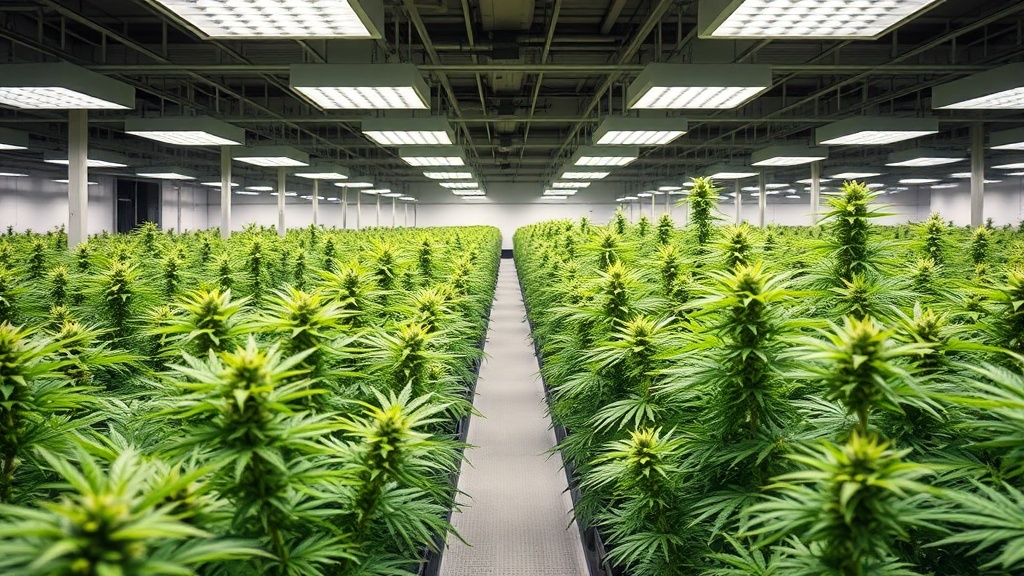
For a cannabis cultivator, the crop is the business. A single fire, equipment failure, mold outbreak, or theft can wipe out months of work and an entire revenue cycle in a matter of hours. Yet cannabis crop coverage is among the hardest insurance to find and the most poorly understood — because federal illegality keeps standard agricultural insurers and federal crop programs off the table entirely.
This guide explains how cannabis crop and cultivation insurance works, the major exposures growers face, how risk differs across indoor, greenhouse, and outdoor operations, and how a broker who shops multiple specialty carriers builds a program that actually protects your plants and your equipment.
Why Cannabis Crops Don't Fit Standard Coverage
Traditional farmers have access to federally backed crop insurance and a deep bench of agricultural carriers. Cannabis growers have neither. Because cannabis is a federally controlled substance, those programs and most admitted carriers won't write it. Coverage exists only through specialty surplus lines carriers willing to underwrite living-plant cannabis exposure — and their forms, definitions, and exclusions vary enormously.
The most important nuance is how a policy defines the insured stock, because cannabis moves through distinct stages:
- Growing/living plants — plants still in the ground or in pots, mid-cycle
- Harvested stock — cut plants, drying and curing material
- Finished inventory — packaged product ready for sale
Many policies treat these differently, with different limits, valuations, and conditions. A grower can think they're fully covered while their living plants — the highest-value, hardest-to-replace asset — are sub-limited or excluded. Reading those definitions carefully is exactly what a specialty broker does.
Core Cultivation Coverages
Crop / Living Plant Coverage
This is the heart of a cultivation program: coverage for the plants themselves against named perils such as fire, smoke, certain equipment failures, and — depending on the form — theft, mold, and disease. Valuation matters: some policies pay actual cash value of inputs, while others address the plant's value at its stage of growth. Understanding which you're buying is essential.
Commercial Property
Property coverage protects the building, build-out, and contents — including grow lights, racking, irrigation, and processing areas — against fire, water damage, and similar perils.
Equipment Breakdown
Cannabis cultivation is equipment-dependent. HVAC, dehumidifiers, CO2 systems, lighting, and environmental controls keep plants alive. Equipment breakdown coverage responds when critical systems fail — and crucially, it can cover the resulting crop loss when, for example, an HVAC failure causes a humidity spike that triggers mold. Without it, a mechanical failure that kills a crop may not be covered under a basic property form.
General Liability and Product Liability
Even a cultivation-only operation needs general liability for visitors and third parties, and product liability once plants become product moving down the supply chain.
Crime and Theft
Cannabis is valuable and easily resold, and cultivation sites — often in remote or industrial areas — are theft targets. Because the industry is still largely cash-based, growers may also hold cash on site. Crime and theft coverage protects both.
Workers' Compensation and Commercial Auto
Trimming, lifting, and working around equipment cause injuries, so workers' comp is essential where you have employees. Commercial auto covers transport of plants, supplies, and product between sites.
How Risk Differs by Grow Type
Indoor
Indoor grows offer the most control over environment and security but concentrate enormous value and depend completely on mechanical systems. The biggest exposures are fire (heat-producing lighting and electrical loads), equipment failure, and mold from humidity control problems. Equipment breakdown coverage is especially important here.
Greenhouse
Greenhouses blend natural light with environmental controls. They face a mix of indoor and outdoor risks — structural damage from wind or snow load, glass or covering failures, plus the climate-control dependence of indoor grows. Disease and pest pressure can be higher than fully sealed indoor rooms.
Outdoor
Outdoor grows have the lowest energy and equipment costs but the highest exposure to weather, wildfire, drought, pests, and theft. Coverage for outdoor living plants is the hardest to place and most likely to carry restrictions, named-peril limitations, or seasonal conditions. A broker who knows which carriers are comfortable with outdoor cannabis is invaluable here.
What Underwriters Evaluate
Specialty carriers assessing a cultivation risk typically look at:
- Grow type (indoor, greenhouse, outdoor) and location
- Security systems, fencing, and surveillance
- Fire suppression and electrical inspection history
- Environmental controls and redundancy
- Integrated pest management and mold-prevention protocols
- Claims history and crop value at peak
Strong controls and documentation directly improve your terms.
A Note on 280E
Cultivators also operate under IRC Section 280E, which limits deductions for cannabis businesses and tightens already-thin margins. That makes a wiped-out crop or a major equipment loss even more painful — and makes the right coverage a core financial safeguard, not an afterthought.
How a Broker Builds Your Program
A specialty broker shops multiple surplus lines carriers, scrutinizes how each defines living vs. harvested stock, pairs crop coverage with equipment breakdown so a system failure doesn't become an uninsured crop loss, and tailors the program to your grow type. As you scale rooms, add greenhouses, or expand outdoor acreage, we keep the coverage in step.
Get a Quote
Your crop is too valuable to leave to a policy you haven't read closely. Call 844-967-5247 or request a quote, and we'll shop the specialty market to protect your plants, your equipment, and your harvest.